How to Choose the Right Industrial Sprockets for Your Needs?
Choosing the right industrial sprockets is crucial for the efficiency of your machinery. These components play a vital role in power transmission. Selecting inappropriate ones could lead to significant downtime and costly repairs.
When evaluating industrial sprockets, consider the application. Are you working in a high-speed environment or a more controlled one? The material of the sprockets also matters. Steel, plastic, or alloy can lead to different performance outcomes. Durability is key; more robust sprockets withstand harsher conditions.
Furthermore, sizing is often overlooked. Incorrect sizes can cause misalignments, leading to premature wear and tear. Understanding the load capacity is essential to avoid future issues. In the world of industrial sprockets, small mistakes can have large repercussions. Don’t underestimate the importance of a thoughtful selection process.
Understanding the Basics of Industrial Sprockets
Industrial sprockets play an essential role in machinery. Understanding their basics is crucial to enhance operational efficiency. A sprocket is a wheel with teeth that engages a chain, facilitating movement in machinery. They come in various sizes and materials, depending on the application. For instance, steel sprockets are common in heavy-duty settings, while plastic is often preferred in lighter applications.
Recent studies show that improperly chosen sprockets can lead to a 20% decrease in machine efficiency. Misalignment and wear can cause significant issues. The incorrect material can also affect performance. A report by the Machinery Maintenance Council indicates that about 30% of equipment failures are linked to issues with sprockets and chains. Choosing the right type is paramount.
Many factors influence sprocket selection. Consider aspects like load capacity and speed requirements. Not all sprockets perform adequately at high speeds. This oversight can create friction and heat, leading to premature wear. Regular inspection is recommended. Understanding these basics aids in selecting the right sprocket type and can save time and costs significantly.
Understanding the Basics of Industrial Sprockets
This bar chart illustrates the relationship between the number of teeth on industrial sprockets and the corresponding torque output measured in Newton-meters (Nm). As the number of teeth increases, the torque output also increases, impacting the choice of sprocket for various applications.
Identifying the Specific Requirements for Your Application
Choosing the right industrial sprockets begins with understanding your application’s specific requirements. Different industries have varied needs. For instance, the material choice can greatly affect performance. Steel sprockets are common due to their strength. However, for applications requiring resistance to corrosion, stainless steel or plastic alternatives may be preferable. A study by the Industrial Sprocket Association indicates that 30% of machinery failures are linked to inappropriate sprocket selection.
Load capacity is another crucial factor. Each sprocket type has a defined load rating. This rating determines how much force it can handle without failing. In applications subjected to heavy loads, selecting a sprocket with a higher load capacity can prevent breakdowns. According to research, using the wrong load-rated sprocket increases operational risks by 25%.
Lastly, consider the pitch size and number of teeth. These elements directly impact speed and efficiency. For example, a sprocket with fewer teeth will rotate faster but may compromise torque. Finding the right balance is essential. In some cases, overly complex gearing ratios can lead to excessive wear. Evaluating these details is important for long-term success in any mechanical system.
How to Choose the Right Industrial Sprockets for Your Needs?
| Sprocket Type |
Material |
Teeth Count |
Pitch Size (inches) |
Load Capacity (lbs) |
Application Type |
| Standard Sprocket |
Steel |
12 |
1.0 |
500 |
Conveyor Systems |
| Double Strand Sprocket |
Aluminum |
16 |
1.5 |
750 |
Heavy Machinery |
| Plastic Sprocket |
Plastic |
10 |
0.75 |
300 |
Light-duty Applications |
| Chain Sprocket |
Carbon Steel |
14 |
1.25 |
600 |
Automated Systems |
| Timing Sprocket |
Steel |
20 |
1.00 |
800 |
Precision Drives |
Evaluating Material Options for Sprocket Durability
Choosing the right material for industrial sprockets is crucial for long-term performance. Durable materials can withstand intense wear during operation. Steel and plastic are commonly used options, each with its own advantages. Steel sprockets excel in high-load scenarios, while plastic sprockets can minimize noise and weight.
When evaluating durability, it's vital to consider environmental factors. Will the sprockets face extreme temperatures? High humidity levels can also affect certain materials. For instance, moisture can lead to corrosion in steel. Conversely, plastic can lose strength in high heat. Assessing the environment is critical.
Don't overlook maintenance requirements. Steel sprockets may need regular lubrication to prevent wear. While plastic options might require less upkeep, they can be sensitive to harsh chemicals. Reflecting on these factors can help in making the right choice for your specific needs. Remember, not every material will fit every application. Your selection should align with your operational demands.
Choosing the Right Size and Pitch for Optimal Performance
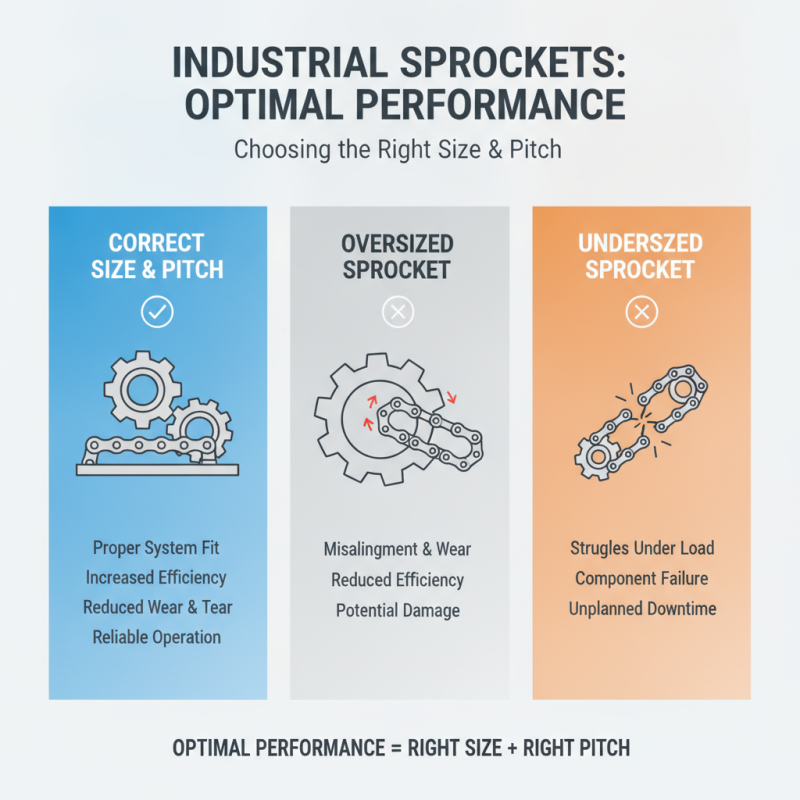
When selecting industrial sprockets, size and pitch play crucial roles. The right size ensures proper fit within the system. This fit impacts overall performance. An oversize sprocket can lead to wear. It can also cause misalignment, reducing efficiency. On the other hand, a small sprocket might struggle under load. This can lead to failures and unplanned downtime.
Pitch refers to the distance between the centers of two adjacent teeth. It’s vital for maintaining smooth operation. An incorrect pitch can cause chain binding. It may result in excessive wear, increasing maintenance costs. Always ensure the pitch matches the chain specifications. Through accurate measurements, efficiency improves. That reduces energy consumption, benefiting the entire operation.
Even with careful planning, mistakes can occur. It's essential to revisit choices regularly. This reflection provides insights into performance issues. Adjusting sprocket size or pitch can resolve these problems. Periodic checks help maintain optimal operation, extending the life of machinery. Consider all factors before finalizing your decision.
Considering Compatibility with Existing Equipment and Chains
Choosing the right industrial sprockets involves careful consideration of compatibility with existing equipment and chains. Each sprocket type has specific designs and sizes that must align with your machinery. Mismatched components can lead to inefficient operation or even machinery failure. Understand the pitch and diameter of your current chains. Also, check tooth count. These factors directly impact performance and longevity.
When assessing compatibility, it’s crucial to examine the material and design of your existing sprockets. Using mismatched materials can result in faster wear. For example, if your chains are hardened, choose sprockets that can withstand similar stresses. This may require consulting with a professional who understands the nuances of industrial components.
It’s worth noting that some users overlook subtle differences. A minor deviation in specifications can lead to issues over time. Be diligent in your research. Seek advice if you’re unsure about specific compatibility concerns. This extra step can prevent costly mistakes. It’s vital to make informed selections to ensure the seamless operation of your equipment.