China Top 10 Industrial Sprocket Manufacturers?
China’s industrial sector depends on reliable power transmission across factories, ports, farms, and processing plants. Industrial Sprockets keep these systems moving, often under dust, vibration, heavy loads, and demanding production schedules. Choosing a suitable manufacturer requires more than comparing prices or catalog sizes.
This guide examines ten notable Chinese manufacturers through practical criteria, including material quality, machining accuracy, heat treatment, customization, delivery capability, and after-sales support. It considers suppliers serving conveyor systems, agricultural machinery, packaging lines, mining equipment, and automated production cells. Factory experience matters. So does traceability.
A strong manufacturer should provide clear drawings, measurable tolerances, inspection records, and consistent communication. Useful evidence may include production photographs, sample testing, customer references, and recognized quality certifications. However, rankings can never capture every regional specialist or changing market condition. That limitation deserves attention.
Some suppliers excel at standard sprockets, while others handle stainless steel, duplex designs, or low-noise chain drives. A polished website does not guarantee stable performance. Real operating conditions reveal more. Buyers should confirm chain compatibility, bore dimensions, keyway details, surface hardness, and expected service life before ordering. This introduction prepares readers to compare China’s leading Industrial Sprockets manufacturers with greater confidence, practical judgment, and appropriate caution.
What Are Industrial Sprockets and How Are They Used?
Industrial sprockets are toothed wheels that drive roller chains, conveyor chains, or specialized power-transmission chains. Their teeth engage with chain links and transfer rotary motion between shafts. Unlike ordinary gears, sprockets do not mesh directly with each other. A chain connects them.
They appear in conveyor systems, packaging equipment, agricultural machines, elevators, and material-handling lines. A small sprocket may rotate quickly on a motor shaft. A larger sprocket can reduce speed while increasing torque. Pitch, tooth count, bore size, and chain compatibility must match precisely. Even a small mismatch can create vibration, noise, and uneven wear. That detail is easy to overlook.
Material choice also matters. Carbon steel suits many general applications, while stainless steel helps resist moisture and corrosion. Heat-treated teeth usually handle repeated loading better. Proper alignment is essential. So is lubrication. In dusty environments, excessive lubricant can attract abrasive particles and shorten chain life. Maintenance teams should inspect tooth profiles, chain elongation, shaft fit, and guarding during scheduled checks. A worn sprocket may look acceptable from a distance, yet its hooked teeth can damage a new chain quickly. No sizing chart replaces field inspection. Real operating conditions are often less perfect than the original design.
How to Evaluate China’s Top Industrial Sprocket Manufacturers
How to Evaluate China’s Top Industrial Sprocket Manufacturers
A reliable evaluation starts with engineering evidence, not polished product photos.
ISO 606 and ANSI/ASME B29.1 provide useful references for chain dimensions, tooth geometry, and interchangeability. Ask each manufacturer for material certificates, heat-treatment records, and inspection reports. Numbers matter. Check whether the reported hardness matches the steel grade and stated application.
Production capability also deserves direct testing.
A 2024 MarketsandMarkets report valued the global power transmission market at over USD 70 billion and identified automation as a major growth driver. This trend increases demand for accurate, durable sprockets. Request sample parts with measured bore diameter, runout, tooth thickness, and keyway dimensions. A supplier should explain its tolerance control clearly. “Precision machining” is too vague.
Quality systems reveal operational maturity.
Review calibration schedules, traceability procedures, corrective-action records, and batch consistency. A factory may show modern equipment, yet outsource critical heat treatment without clear controls. That is risky. Ask for a pre-shipment inspection plan and verify packaging for oil protection, rust prevention, and tooth damage. A common mistake is judging only unit price. Lower pricing can hide shorter service life, unstable hardness, or repeated fitment problems. The better question is whether the supplier can maintain identical performance across several production batches. Minor documentation gaps should not be ignored, but they can be corrected when communication is transparent and evidence follows.
Key Products, Materials, and Manufacturing Capabilities
China Top 10 Industrial Sprocket Manufacturers?
When comparing China’s top ten industrial sprocket manufacturers, examine products, materials, and process control. Standard roller-chain sprockets should follow ISO 606 dimensions. Common choices include C45 carbon steel, 40Cr alloy steel, and stainless steel for corrosive environments. Cast iron suits slower drives, while engineered polymers reduce noise and weight.
The World Steel Association’s World Steel in Figures 2024 reports that China produced about 1,019 million tonnes of crude steel in 2023. This large supply base supports stable material sourcing, but steel volume alone proves little. Ask about chemical certificates, hardness mapping, tooth-profile inspection, and batch traceability. Useful manufacturing capabilities include CNC hobbing, broaching, induction hardening, grinding, and coordinate measuring machines. Some suppliers also provide taper-bore, duplex, and custom conveyor sprockets.
Tips: Request a sample report before placing a bulk order. Check pitch diameter, bore tolerance, runout, and surface hardness. A supplier claiming “high precision” should provide numbers. No factory is perfect. I would also inspect packaging, because damaged teeth can ruin an otherwise accurate assembly. The 2024 ISO Survey reports millions of ISO 9001 certificates worldwide, yet certification does not replace process evidence. A practical audit should review machine maintenance, heat-treatment records, and failed-part analysis. This step is often skipped. That is a mistake.
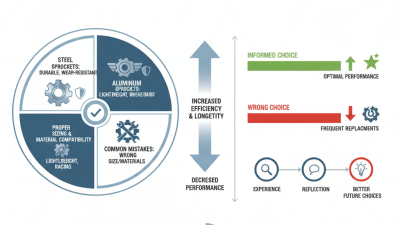
This chart presents a non-company-specific industry snapshot of commonly reported product categories, materials, and manufacturing capabilities among leading Chinese industrial sprocket manufacturers. The values are normalized capability indicators rather than company rankings or sales data.
How to Choose the Right Chinese Sprocket Manufacturer
Choosing the right Chinese sprocket manufacturer requires more than comparing unit prices. UNIDO’s International Yearbook of Industrial Statistics 2024 reports that China produced about 31.6% of global manufacturing value added in 2022. This scale offers strong machining capacity, but capability varies widely between suppliers. Verify whether the factory makes sprockets in-house or outsources cutting, heat treatment, and finishing.
Request samples made from the same steel grade and tooth profile as your order. Check bore tolerance, tooth runout, hardness depth, keyway accuracy, and surface finish. ISO 606 provides dimensional guidance for roller chains and sprockets, but it does not replace application testing. Ask for material certificates, inspection records, calibration dates, and a traceable production batch. Useful suppliers should explain their process clearly.
Cost is only one signal. A 2024 MHI industry report identifies supply disruption as a major operational concern, so confirm lead times, spare-part availability, and packaging protection before signing. During factory audits, a polished catalog can hide weak inspection control. I learned that the hard way. Ask to see rejected parts, not only perfect samples. A small pilot order is wiser than a large commitment, though it may feel slower. Select the manufacturer that proves repeatable quality under your load, speed, environment, and maintenance conditions.