Leave Your Message
Choosing the right timing pulley can determine whether a belt drive runs quietly or fails under load. This guide introduces 10 Best Timing Pulleys for Global Buyers, based on practical engineering factors rather than attractive catalog images. Each option deserves attention for its tooth profile, material, bore design, and compatibility with widely used synchronous belts. Small details matter.
Global purchasing adds another layer of risk. Buyers must check dimensional drawings, tolerance data, surface treatment, packaging quality, and supplier traceability. An aluminum pulley may suit lightweight automation, while a steel pulley may better handle repeated industrial loads. Stainless steel can be valuable in humid or washdown environments, but it may increase cost. These differences are easy to overlook.
Performance depends on the application.
This overview considers speed, torque, operating temperature, noise, corrosion exposure, and maintenance access. It also highlights documentation, quality inspection, and communication with overseas suppliers. Those factors often separate a dependable component from a costly replacement. Still, no ranking is perfect. A pulley praised for precision may prove unsuitable when the belt width, shaft fit, or actual load changes. That limitation deserves honest attention.
The selections are intended to support informed comparison, not replace technical verification. Buyers should confirm tooth count, pitch, flange style, keyway dimensions, and allowable operating conditions before ordering. Real factory experience shows that one overlooked measurement can delay an entire assembly. Reliable sourcing requires patience. A careful review can reduce mismatched parts, unexpected vibration, and avoidable downtime.
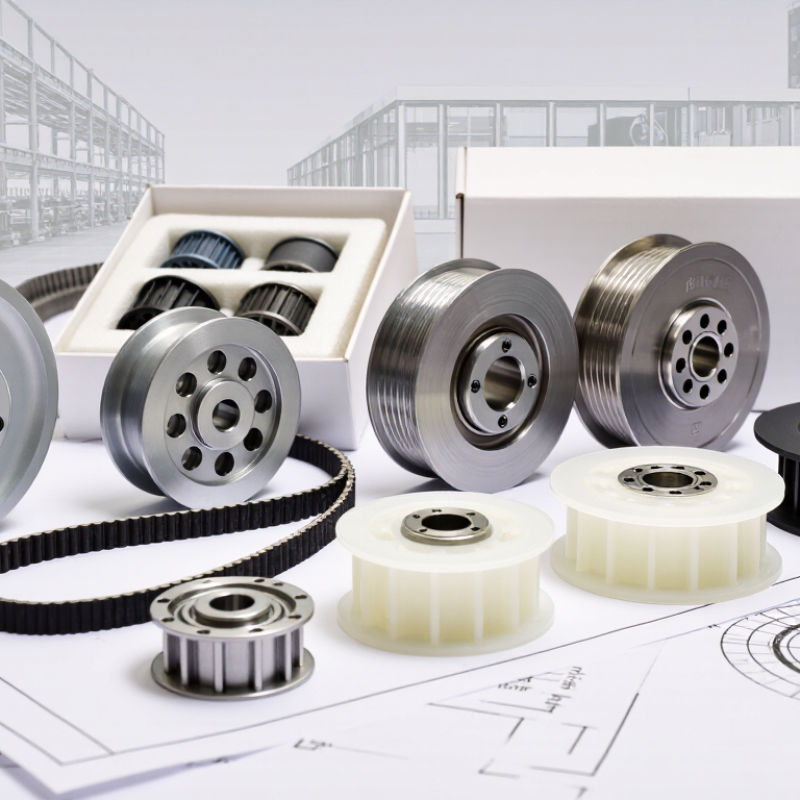
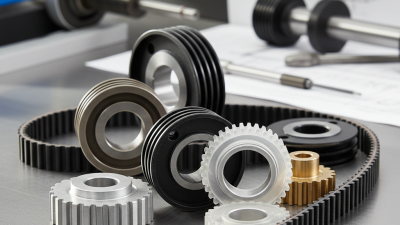
A timing pulley is a toothed wheel designed to work with a matching toothed belt. Its teeth prevent the belt from slipping during rotation. This connection transfers motion between shafts with precise timing. Unlike a smooth pulley, it maintains a fixed relationship between the driving and driven components. That accuracy matters in packaging machines, robotics, conveyors, and engine systems.
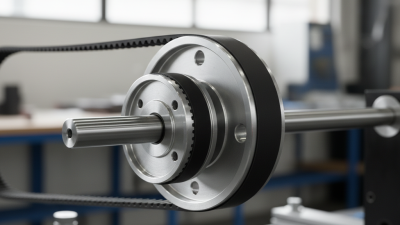
The pulley rotates when the motor turns the driving shaft. Its teeth engage with the belt teeth and move the belt forward. The belt then drives a second pulley at a controlled speed. Pulley diameter affects speed and torque. A larger driven pulley usually rotates more slowly but produces greater torque. Correct tooth spacing is essential. Even a small mismatch can create noise, vibration, or premature wear.
In equipment inspections, I check alignment before blaming the belt. Poor shaft alignment can damage otherwise suitable pulleys. Buyers should also review material, bore size, tooth profile, operating temperature, and expected load. Aluminum pulleys may reduce rotating weight, while steel options can support demanding loads. That assumption is not always right. Lightweight parts are not automatically better. Dust, moisture, and frequent starts can change the selection. I have seen installations fail because the pulley fit was treated as a minor detail. A secure fit, accurate dimensions, and regular tension checks support dependable timing.
A timing pulley is a toothed wheel that engages with the matching teeth of a synchronous belt. The positive tooth engagement prevents normal belt slip and transfers rotary motion with a fixed speed ratio. The best pulley depends on belt pitch, tooth profile, load, speed, environment, bore arrangement, and required alignment accuracy.
| Option | Timing Pulley Type | Common Belt Pitch | Typical Material | Tooth Profile | Typical Bore Arrangement | Best-Suited Applications | Main Advantages | Important Selection Considerations |
|---|---|---|---|---|---|---|---|---|
| 1 | Aluminum Flanged Pulley | 2 mm, 3 mm, 5 mm, 8 mm | Machined aluminum alloy | Usually trapezoidal or metric curvilinear | Finished bore, pilot bore, or clamping hub | Packaging equipment, light automation, laboratory systems, and motion-control assemblies | Low rotating mass, good corrosion resistance, easy machining, and fast acceleration | Check the allowable torque and flange position. Aluminum is not always suitable for high shock loads or abrasive environments. |
| 2 | Steel High-Torque Pulley | 5 mm, 8 mm, 14 mm | Carbon steel or alloy steel | Trapezoidal or high-torque curvilinear | Finished bore with keyway, taper-lock hub, or pilot bore | Conveyors, industrial drives, machine tools, and heavy-duty automation | High tooth strength, good resistance to impact loading, and reliable performance at elevated belt tension | Higher mass and possible corrosion require proper balancing, surface protection, and shaft-size verification. |
| 3 | Stainless Steel Pulley | 3 mm, 5 mm, 8 mm, 14 mm | Corrosion-resistant stainless steel | Metric trapezoidal or curvilinear | Finished bore, keyway, or clamping hub | Food-processing machinery, washdown equipment, chemical handling, and outdoor installations | Strong corrosion resistance and good mechanical durability in humid or frequently cleaned environments | Material cost and weight are generally higher than aluminum. Confirm compatibility with cleaning chemicals and belt materials. |
| 4 | Small-Size Miniature Pulley | 2 mm, 2.5 mm, 3 mm | Aluminum, engineering plastic, or stainless steel | Small trapezoidal or curvilinear profile | Small finished bore or clamping screw hub | Compact printers, medical instruments, desktop automation, and small positioning stages | Space-saving design, low inertia, and suitability for compact drive layouts | Small pulleys may have limited tooth engagement and lower torque capacity. Use the minimum recommended tooth count. |
| 5 | Wide-Belt Pulley | 5 mm, 8 mm, 14 mm, 20 mm | Steel or aluminum alloy | High-torque trapezoidal or curvilinear | Keyed bore, taper-lock hub, or custom hub | High-load conveyors, lifting mechanisms, industrial indexing, and synchronized roller systems | Greater belt width increases load-carrying capacity and helps distribute tooth and tensile forces | Verify shaft rigidity, belt tracking, flange strength, and the available installation space. |
| 6 | Double-Sided Timing Pulley | 3 mm, 5 mm, 8 mm, 14 mm | Aluminum alloy or steel | Matching teeth on both pulley faces | Finished bore, keyway, or clamping hub | Serpentine drives, compact multi-axis mechanisms, and systems requiring two synchronous belt paths | Can drive or synchronize components on both sides while reducing the number of separate shafts | Both belts must use compatible pitch and tooth geometry. Carefully control belt tension and parallel alignment. |
| 7 | Idler Timing Pulley | 2 mm, 3 mm, 5 mm, 8 mm, 14 mm | Aluminum, steel, or polymer with a bearing | Matches the selected synchronous belt | Bearing-mounted bore or fixed axle bore | Belt tensioning, direction changes, long-center-distance drives, and improved belt engagement | Helps guide the belt and can increase the wrap angle around a driving pulley | Use a toothed idler where positive engagement is needed. Excessive preload increases bearing and belt wear. |
| 8 | Taper-Lock Hub Pulley | 5 mm, 8 mm, 14 mm, 20 mm | Steel or cast iron | Trapezoidal or curvilinear | Removable taper-lock bushing system | Industrial machinery, retrofit projects, conveyors, and drives requiring frequent pulley replacement | Allows convenient installation and removal without machining a custom finished bore for every shaft | Match the bushing, shaft diameter, key size, and tightening procedure. Improper installation can cause hub damage or runout. |
| 9 | Zero-Backlash Servo Pulley | 2 mm, 3 mm, 5 mm, 8 mm | Precision-machined aluminum or hardened steel | Curvilinear or precision trapezoidal | Precision bore, keyless locking device, or clamping hub | Robotics, servo axes, inspection systems, CNC equipment, and high-accuracy positioning | Supports accurate phase synchronization and low lost motion when correctly matched with the belt and drive system | Check concentricity, runout, tooth accuracy, shaft fit, belt stiffness, and the required acceleration profile. |
| 10 | Flanged or Guide-Edge Pulley | 3 mm, 5 mm, 8 mm, 14 mm | Aluminum alloy, steel, or stainless steel | Trapezoidal or curvilinear | Finished bore, keyway, or clamping hub | Vertical drives, compact conveyors, equipment with limited lateral guidance, and applications sensitive to belt wandering | Flanges help maintain belt position when the system is correctly aligned | Flanges are not a substitute for shaft parallelism. Confirm belt width, flange clearance, and the recommended flange arrangement. |
Buyer checklist: Select the pulley only after confirming the belt pitch, tooth profile, number of teeth, belt width, design torque, maximum speed, shaft diameter, keyway or locking method, center distance, operating temperature, and environmental requirements. The pulley and belt must use the same pitch and compatible tooth geometry.