Inquiry
Leave Your Message

10 Tips for Buying Timing Belt Pulleys?

Choosing the right Timing Belt Pulleys sounds simple. In practice, small details can decide whether a drive runs smoothly or fails early.

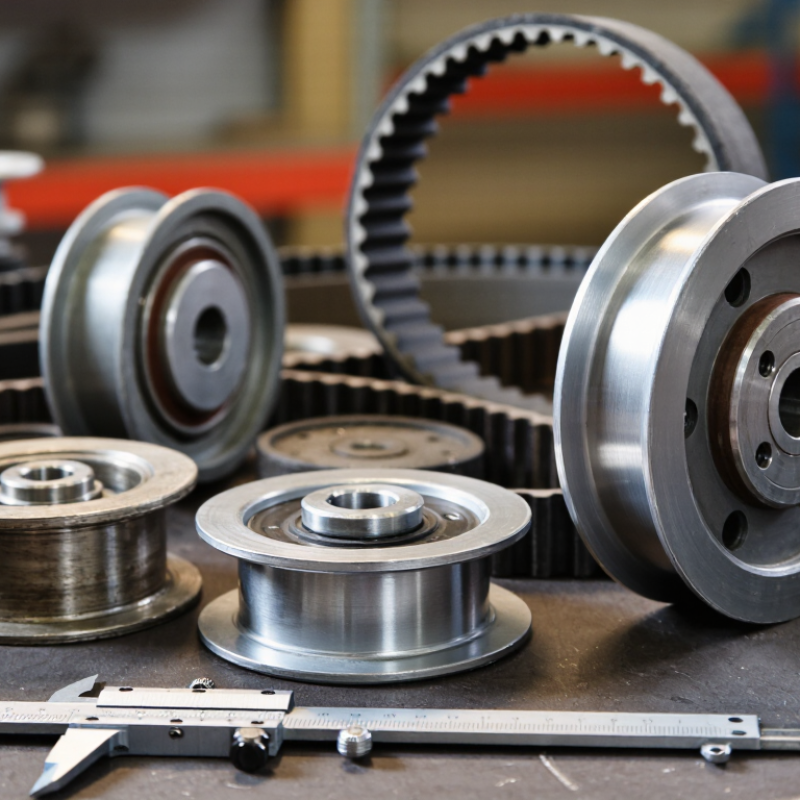
This guide presents 10 practical tips for making a safer purchase. It focuses on tooth profile, pitch, bore size, flange design, material, and operating load. These details matter. A pulley that looks correct may still mismatch the belt. Even a slight pitch error can create noise, vibration, and uneven wear. In workshop maintenance, careful measurement often prevents expensive replacement work. Check the shaft diameter with a reliable caliper. Confirm the belt width beside the pulley face. Then compare every measurement with the manufacturer’s technical data.

Experience also shows that application conditions deserve close attention. Temperature, dust, moisture, speed, and starting torque can change the best choice. Aluminum pulleys suit many lightweight systems, while steel may better handle repeated loads. However, material alone does not guarantee durability. Tooth accuracy, surface finish, and proper installation remain important. Ask suppliers for drawings, tolerances, compatible belt references, and load information. A trustworthy supplier should answer clearly, not rely on vague promises.

I have sometimes treated a standard pulley as a universal solution. That assumption was wrong. This guide encourages a slower, more thoughtful process. It also recognizes that real installations are rarely perfect. Limited space, worn shafts, or incomplete records may complicate decisions. When uncertainty remains, consult a qualified engineer and verify the complete drive system before ordering. The goal is not merely to buy a pulley. It is to build a dependable timing drive that performs consistently in the real world.
10 Tips for Buying Timing Belt Pulleys?

Define the Role and Operating Requirements of a Timing Belt Pulley

10 Tips for Buying Timing Belt Pulleys

A timing belt pulley transfers torque through synchronized teeth, not friction. Define that role before comparing prices or materials. Will it drive a conveyor, index a machine, or control a servo axis? Each task changes the required tooth profile, pitch, width, and bore. ISO 5296 provides terminology and dimensional guidance for toothed belts and pulleys. Use it as a verification reference, not as a substitute for engineering judgment.

Record speed, torque, duty cycle, and shaft alignment. Include start-up loads and reversing forces. A pulley rated for steady motion may fail during frequent acceleration.

The U.S. Department of Energy’s industrial motor-system guidance notes that properly selected synchronous belt drives can approach 98% efficiency. That figure assumes correct tension, alignment, and maintenance. Reality can be less impressive. Dust, heat, and poor installation quickly reduce performance. Small details matter.

Choose the material after checking temperature, corrosion, and inertia limits. Steel suits high loads, while aluminum can reduce rotating mass. Confirm the bore, keyway, flange, and axial retention method. Measure the shaft instead of trusting an old drawing. I have seen purchasing teams overlook flange clearance by only a few millimeters. That mistake creates rubbing, noise, and premature wear. The International Energy Agency’s Energy Efficiency 2023 report identifies industry as a major energy user, so unnecessary transmission losses deserve attention. Ask for tooth accuracy, runout data, balancing requirements, and inspection records before approval.

Choose the Correct Belt Profile, Tooth Count, and Pulley Size

Buying a timing belt pulley starts with the belt profile, not the pulley’s outside appearance. Match the pulley groove shape to the belt’s tooth geometry, pitch, and width. A mismatch can create noise, skipped teeth, and uneven load transfer. Confirm the belt’s pitch, such as 5 mm or 8 mm, from its specification sheet. Do not rely on a quick visual comparison. Small differences matter. In field maintenance, I have seen a pulley look correct while its profile was wrong. That mistake caused premature wear after only a short operating period.

Choose the tooth count according to the required speed ratio, torque, and minimum tooth engagement. A smaller pulley may save space, but it increases bending stress. A larger pulley often runs more smoothly, yet it needs more room. Calculate pitch diameter by multiplying tooth count by pitch, then dividing by pi. Check the driving and driven pulleys together. Their ratio controls output speed. I once prioritized compactness and underestimated starting torque. The machine worked, but belt life was disappointing.

Pulley size also includes face width, bore diameter, keyway, flange design, and material. Select a face width that supports the belt without excessive side movement. Verify the shaft fit carefully; a loose bore can damage both components. Check flange clearance against nearby housings and tensioning hardware. For dusty or wet equipment, review corrosion resistance and sealing conditions. Use measured shaft dimensions, not old drawings alone. Specifications can be outdated. Before ordering, compare the pulley with operating speed, torque, center distance, and installation space. A qualified engineer may reveal assumptions you missed.

10 Tips for Buying Timing Belt Pulleys: Choose the Correct Belt Profile, Tooth Count, and Pulley Size

The chart shows how pulley pitch diameter changes with tooth count across common synchronous-belt pitch profiles. Pitch diameter is calculated using the standard relationship: pitch diameter = belt pitch × number of teeth ÷ π.

When selecting a timing belt pulley, first match the pulley profile to the belt profile, then select a tooth count that provides the required speed ratio and minimum bending diameter. Confirm the pulley width, bore, keyway, flange design, operating speed, load, and installation clearance before purchasing.

Check Materials, Manufacturing Quality, and Dimensional Accuracy

10 Tips for Buying Timing Belt Pulleys?

Material choice affects wear, noise, and heat resistance. Steel suits high loads, while aluminum reduces rotating mass. Polymer pulleys can perform well in cleaner, lighter-duty systems. Match the material with torque, speed, temperature, and chemical exposure. A shiny surface is not proof of quality.

The 2023 ISO Survey recorded 1,265,216 ISO 9001 certificates across 189 countries and economies. This figure shows how widely documented quality systems are used in manufacturing. Still, certification alone cannot guarantee a precise pulley. Ask for inspection records, material certificates, and traceability documents. Check tooth geometry, bore size, keyway position, and flange alignment. Small errors can create belt tracking problems. Very small errors matter.

Dimensional accuracy deserves direct measurement. Look for concentricity, radial runout, face runout, and pitch diameter results. Coordinate-measuring machines and calibrated gauges provide stronger evidence than visual inspection. ISO 286-1 tolerance principles can help interpret shaft and bore fits. However, the pulley and shaft must be evaluated together. I have seen apparently accurate parts fail because the assembly fit was overlooked. That mistake is easy to repeat.

Review the machining marks around the teeth and bore. Uneven marks may indicate tool wear or unstable cutting. Ask whether the supplier uses statistical process control for repeated production. Request a sample inspection report before placing a large order. It may feel excessive. It is cheaper than replacing a damaged belt, bearing, or stopped machine.

Match Bore, Shaft, Flanges, and Mounting Features Properly

10 Tips for Buying Timing Belt Pulleys

A timing belt pulley should match the shaft, not merely the belt width. Measure the shaft diameter with a micrometer, including keyway dimensions and any flat section. A pulley bore that is slightly oversized can create backlash, vibration, and uneven tooth wear. I once trusted an old drawing instead of checking the actual shaft. That shortcut caused an avoidable replacement.

Check the pulley’s flange arrangement carefully. Single, double, and flange-free designs guide the belt differently. Confirm the belt’s running direction, allowable side movement, and clearance around nearby guards. The pulley must also fit the shaft length without forcing the hub against a bearing or spacer. Inspect the mounting method, too. Set screws, clamping hubs, and keyed connections need different shaft preparations. Their torque requirements must match the installation instructions.

Small details matter. Verify pitch, tooth profile, outside diameter, and material before ordering. Compare the pulley width with the belt width, leaving enough room for tracking without excessive overhang. Check the mounting face for flatness and confirm that bolt holes align with the machine plate. Measure twice. It is inexpensive insurance. Consider speed, load, temperature, and contamination in the working area. A clean workshop does not represent every operating condition. My own fitting checks have improved after recording real belt drift during operation, rather than relying only on catalog dimensions. When uncertain, request a dimensional drawing and compare every critical feature against the assembled machine.

10 Tips for Buying Timing Belt Pulleys? - Match Bore, Shaft, Flanges, and Mounting Features Properly

No. Buying Tip What to Check Accurate Selection Guidance Common Error to Avoid
1 Match the belt pitch Confirm the distance between adjacent tooth centers and the belt profile. The pulley pitch must be identical to the belt pitch. Common metric pitches include 2 mm, 3 mm, 5 mm, 8 mm, and 14 mm; common imperial pitches include 1/5 in, 1/4 in, 3/8 in, and 1/2 in. Do not use a pulley with a similar-looking tooth shape but a different pitch or tooth profile.
2 Match the tooth count Check the required number of teeth for speed ratio, center distance, and available space. For a timing pulley, pitch diameter is calculated as pitch diameter = tooth count × pitch ÷ π. A larger tooth count generally produces a larger pulley and smoother belt bending. Changing tooth count changes the speed ratio and may alter the center-distance calculation.
3 Match the bore to the shaft Measure the shaft diameter, shaft type, keyway, and required fit. The finished bore must suit the shaft diameter and tolerance. For example, a nominal 10 mm shaft requires a bore specification compatible with the actual shaft tolerance and the intended clearance, transition, or interference fit. Never assume a nominal bore will fit a shaft without checking actual dimensions and tolerance limits.
4 Verify keyway details Confirm key size, keyway width, keyway depth, and keyway orientation. Metric shaft assemblies commonly use parallel keys specified by width, height, and length; imperial assemblies commonly use inch-based key dimensions. The pulley keyway must accept the correct key without excessive looseness. A bore can be correct while the pulley still fails to mount because the keyway standard or depth is different.
5 Choose the correct flange arrangement Determine whether the pulley needs no flanges, one flange, or flanges on both sides. Flanges help retain the belt laterally, especially where shaft alignment or vibration could cause tracking movement. A flanged pulley must provide enough side clearance for the belt and mating pulley. Do not add flanges where they interfere with belt width, adjacent pulleys, bearing housings, or the belt’s natural tracking path.
6 Match the belt width Compare the belt’s nominal width with the pulley tooth-face width. The pulley tooth face should provide full belt engagement without forcing the belt against a flange. The selected width must also accommodate the required torque and allowable tooth load for the belt system. A pulley that is too narrow can cause edge loading, while excessive width may create avoidable clearance and weight problems.
7 Confirm mounting features Check set-screw holes, clamp hubs, taper-lock interfaces, pilot diameters, and bolt patterns. A pulley may be mounted with a plain bore and key, set screws, a clamping hub, or a removable bushing. Select the mounting method according to torque, service access, shaft length, and required concentricity. Do not mix components from different mounting systems unless their dimensions and installation requirements are fully compatible.
8 Check torque and load capacity Review transmitted torque, rotational speed, duty cycle, shock loading, and starting conditions. Select tooth count and belt width using the belt manufacturer’s rated power or allowable tooth load. Higher torque, frequent starts, and shock loads generally require a wider belt or a larger pitch system. Do not size the pulley by diameter alone; tooth engagement and belt capacity determine the practical load limit.
9 Verify alignment and center distance Check shaft parallelism, pulley face alignment, belt length, and available adjustment range. Parallel shafts and aligned pulley faces reduce edge wear. For a two-pulley drive, center distance should be calculated from the belt pitch length, tooth counts, and pitch, then confirmed against the machine’s adjustment range. Flanges cannot correct poor shaft alignment and may hide an installation problem until the belt wears.
10 Consider material and operating conditions Review speed, temperature, moisture, chemicals, dust, corrosion exposure, and inertia. Aluminum is often selected for low rotating mass, steel for higher strength and wear resistance, and stainless steel where corrosion resistance is important. The material must also be compatible with the belt and surrounding environment. Do not choose material only by appearance; corrosion, temperature, inertia, and tooth wear can affect service life.
Final checklist: Before ordering, confirm pitch, tooth profile, tooth count, belt width, bore diameter and tolerance, keyway, flange arrangement, mounting method, material, and operating load.

Verify Compatibility, Supplier Reliability, and Total Purchase Cost

10 Tips for Buying Timing Belt Pulleys

Verify compatibility before comparing prices. Match the belt profile, pitch, width, tooth count, bore, and flange design. A pulley may look correct but still create tooth jumping or edge wear.

Tip 1: Request a dimension drawing.

Tip 2: Confirm the belt manufacturer’s matching series.

Tip 3: Check the shaft diameter and keyway.

Tip 4: Ask about operating temperature and speed limits.

Tip 5: Inspect material and surface finish requirements.

Supplier reliability affects downtime and total purchase cost. The U.S. Department of Energy reports that motor-driven systems consume about 69% of industrial electricity. Poor alignment can increase that burden through friction and unstable motion.

Tip 6: Request inspection records and material certificates.

Tip 7: Confirm production tolerances, not only catalog dimensions.

Tip 8: Review lead times and replacement availability.

Tip 9: Test one sample under real load before ordering widely.

I have seen small bore errors become expensive installation delays.

Purchase price is only one line. Add freight, tooling, customs, maintenance labor, rework, and possible production losses. The 2023 Deloitte Global Chief Procurement Officer Survey highlights ongoing pressure to improve resilience and manage supply risk.

Tip 10: Compare suppliers using a landed-cost worksheet.

Include warranty terms and failure-response time.

Be careful with optimistic savings claims. A cheaper pulley can demand more frequent replacement. That calculation is often missed.

Record the decision, assumptions, and test results for future audits.